Sir Thomas Roe (c. 1581 – 1644) was an English diplomat and traveler best known for his embassy to the court of the Mughal Emperor Jahangir. His time in India, from 1615 to 1619, was a pivotal period in the history of Anglo-Indian relations and the English East India Company.
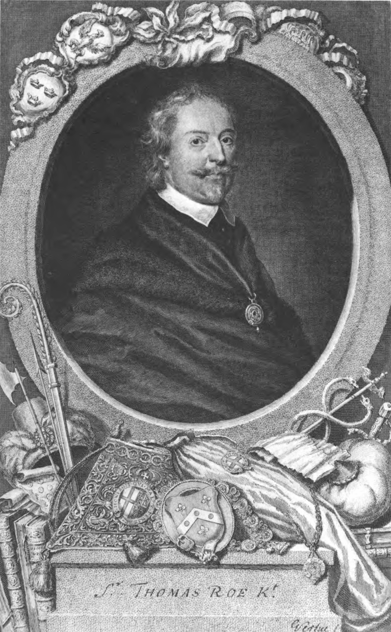
Life and Mission in India
Roe arrived in Surat, India, in 1615 as the first official English ambassador to the Mughal court. His primary objective, on behalf of King James I, was to secure a commercial treaty with Jahangir that would grant the English East India Company the right to establish permanent trading factories in the empire. His mission was not one of conquest but of diplomacy and commerce.
He spent nearly four years in India, largely at Jahangir’s court in Ajmer, and later in Mandu and Ahmedabad, following the emperor’s mobile court. He faced significant challenges, including the intrigues of the Portuguese, the complex political dynamics of the Mughal court, and the language barrier. His journal and correspondence detail his frustrations and triumphs in navigating this intricate world.
Impact and Legacy
Roe’s embassy laid the groundwork for the English East India Company’s future success in India. Although he did not secure a formal treaty in the modern sense, he obtained a series of important concessions and firmans (royal decrees) from the emperor that solidified the Company’s presence and protected its trade interests.
His detailed journal, The Embassy of Sir Thomas Roe to the Court of the Great Mogul, is a vital historical document. It provides a unique and unfiltered view of the Mughal court, its rulers, and its customs. It serves as a crucial primary source for historians studying the early interactions between Europe and India, offering insights into the political, commercial, and social landscape of the early 17th century. His observations and advice to the Company shaped future English policy and strategy, and his account remains a cornerstone of travel writing from the period.
Works
Roe, Sir Thomas. The Embassy of Sir Thomas Roe to the Court of the Great Mogul, 1615-19